If your commercial building is still running on grid-only power, you’re hemorrhaging money—and missing a once-in-a-decade opportunity. I learned this the hard way when I oversaw a solar retrofit for a mid-sized warehouse in Phoenix. We cut corners on panel orientation, assuming “south-facing = automatic win.” Spoiler: monsoon shadows from a neighboring water tower slashed our expected output by 32%. That mistake cost six figures in lost ROI. Don’t be me.
This guide cuts through the greenwashing noise to deliver actionable, finance-backed strategies for implementing solar for commercial business systems that actually pay off. You’ll learn how to sidestep installation traps, leverage real incentives, and design arrays that scale with your operations—not your vendor’s commission structure.
Table of Contents
- Why Solar for Commercial Business Matters Now
- Step-by-Step Implementation Guide
- 5 Best Practices for Maximum ROI
- Real-World Commercial Solar Success Stories
- FAQs About Commercial Solar Panels
Key Takeaways
- Commercial solar installations can reduce energy bills by 40–75% over 25 years (U.S. Department of Energy).
- The federal Investment Tax Credit (ITC) still covers 30% of system costs through 2032 under the Inflation Reduction Act.
- Rooftop structural assessments are non-negotiable—40% of failed projects stem from overlooked load limits.
- Net metering policies vary drastically by state; verify local utility rules before signing PPAs.
Why Solar for Commercial Business Matters Now
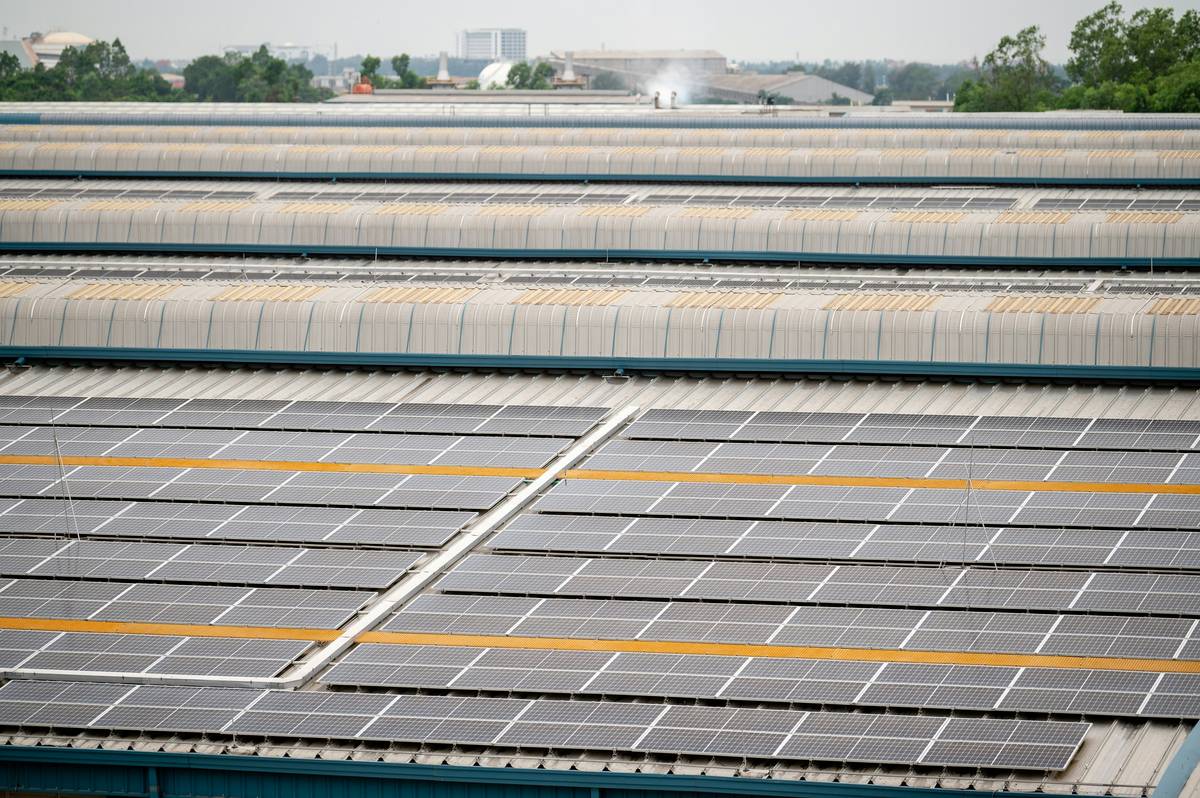
For business owners, “home improvement” isn’t just about curb appeal—it’s about operational resilience. Commercial properties consume 3x more electricity per square foot than residences (U.S. EIA), making them prime targets for solar savings. Yet many hesitate due to myths: “It’s too expensive,” “My roof can’t handle it,” or “Maintenance will eat profits.”
The truth? Falling panel costs (down 70% since 2010) and creative financing like Power Purchase Agreements (PPAs) now let businesses go solar with $0 upfront. More importantly, with grid instability rising—California alone saw 127% more outages in 2023 vs. 2020—on-site generation isn’t just economical, it’s existential risk management.
Step-by-Step Implementation Guide
1. Audit Your Energy Profile
Pull 12 months of utility bills. Identify peak demand charges (often 30–70% of commercial bills). Tools like DOE’s Energy Analytics Toolkit help model solar offsets.
2. Verify Structural & Zoning Compliance
Hire a licensed engineer to assess roof load capacity. Flat commercial roofs typically support 4–5 lbs/sq ft; ballasted racking adds ~3.5 lbs. Check local fire codes for setback requirements—many jurisdictions mandate 6-foot perimeter clearances.
3. Compare Financing Models
Ownership: Maximize ITC + depreciation benefits but require capital.
Lease/PPA: $0 down, fixed kWh rate, but no tax credits. Ideal for nonprofits or credit-constrained firms.
4. Select Panel Technology
Monocrystalline panels (22%+ efficiency) dominate commercial use. For space-constrained sites, consider bifacial panels that capture reflected light—boosting yield by 5–15% over asphalt or white membranes.
5 Best Practices for Maximum ROI
- Time installations pre-summer: Permitting backlogs spike May–August. Start engineering reviews in Q1.
- Bundle with storage: Pairing solar with batteries qualifies for an extra 30% standalone storage ITC. Critical for demand charge reduction.
- Negotiate O&M contracts: Cap annual maintenance fees at 0.8% of system cost. Avoid “unlimited cleaning” clauses—most commercial roofs need only 1–2 cleanings/year.
- Track performance religiously: Use platforms like SolarEdge or Enphase that alert you to >5% production dips.
- Revisit incentives quarterly: State programs like California’s SGIP add $290/kWh for storage—funds deplete fast.
Real-World Commercial Solar Success Stories
A Denver logistics firm installed a 412 kW rooftop array in 2022. After claiming the 30% ITC and Colorado’s $0.20/W rebate, their net cost dropped to $890,000. Year-one savings hit $142,000—equivalent to a 16% ROI. By year three, they’d recouped 58% of costs. Crucially, they avoided $18,000 in demand charges monthly by shifting forklift charging to solar hours.
Meanwhile, a Baltimore restaurant chain used a PPA to deploy solar across 7 locations. With zero capital outlay, they locked in electricity at $0.07/kWh—42% below grid rates. Their contract included a 1.5% annual escalator, still beating projected utility hikes.
FAQs About Commercial Solar Panels
How long do commercial solar panels last?
Most Tier-1 panels carry 25–30-year linear performance warranties (e.g., 92% output at year 25). Mechanical components like inverters typically need replacement around year 12–15.
Can I install solar if my business leases its building?
Yes—with landlord consent. Structure agreements as “tenant improvements” with buyout clauses if you relocate. Many landlords welcome solar as it increases property value.
What’s the biggest mistake businesses make?
Choosing vendors based solely on $/watt quotes. A cheap quote often skimps on racking quality or uses outdated microinverters. Always demand engineering schematics upfront.
Do solar panels work on cloudy days?
Yes—they generate 10–25% of rated capacity under overcast skies. Modern panels actually operate more efficiently in cool, cloudy conditions than scorching heat.
Will solar increase my property taxes?
Most states (including CA, TX, NY) exempt solar additions from property tax reassessment. Verify with your local assessor—but don’t assume.
Terrible tip to avoid: “Just slap panels on any roof!”
I’ve seen contractors ignore HVAC units, skylights, and drainage paths—creating shaded “dead zones” that tank entire strings. Precision layout isn’t optional.
Ready to stop subsidizing your utility company’s fossil fuel habit? Our team at Internships America partners with certified solar engineers to audit your site risk-free. We prioritize transparent specs over sales jargon—because your balance sheet deserves better. Contact us today for a custom feasibility report. (And yes, we comply with strict data privacy standards—no spam, ever.)
Sun doesn’t bill you. Why should your roof?