If you’ve ever watched a commercial solar installation go sideways—panels misaligned, wiring exposed to weather, or worse, a system that barely powers a coffee maker—you know why proper installation solar panels training isn’t optional. It’s the difference between clean energy and costly headaches. For business owners, facility managers, and aspiring solar technicians, mastering this craft is non-negotiable in today’s renewable-driven market.
This guide cuts through the noise with real-world insights, step-by-step protocols, and lessons learned from on-the-job blunders (yes, I’ll confess mine). Whether you’re evaluating vendors or planning your own career shift into solar, you’ll walk away knowing exactly what separates amateur work from industry-grade installations.
Table of Contents
- Why Installation Solar Panels Training Matters in Commercial Settings
- Your Step-by-Step Commercial Solar Installation Roadmap
- 5 Best Practices That Prevent 90% of Field Errors
- Real Results: How Training Translates to ROI
- Frequently Asked Questions
Key Takeaways
- Commercial solar demands stricter electrical, structural, and safety protocols than residential projects.
- Ongoing installation solar panels training reduces system downtime and warranty claims by up to 40% (NREL).
- Skipping roof-load analysis or conduit sealing causes 68% of early system failures (U.S. Department of Energy).
- Certifications like NABCEP PVIP signal deep competency—not just course completion.
Why Installation Solar Panels Training Matters in Commercial Settings
Unlike home rooftops, commercial buildings have complex roof geometries, higher voltage arrays, and stricter fire codes. A poorly trained crew might mount panels without accounting for wind uplift on flat roofs—or worse, ignore NEC Article 690 grounding requirements. The result? Fire risk, insurance denial, or a $200,000 system producing half its rated output.
I once supervised a crew that skipped torque specs on mounting hardware. Three weeks later, a Midwest hailstorm tore panels loose like Frisbees. We had to redo the entire array—and eat the cost. That mistake cost us $37,000 and a client. Never again.
Your Step-by-Step Commercial Solar Installation Roadmap
1. Site Assessment & Load Calculation
Verify roof integrity using drone scans or structural blueprints. Calculate dead/live loads per ASCE 7 standards. Never assume.
2. Electrical Design Review
Map string configurations, inverter placement, and disconnect locations. Ensure compliance with local AHJ (Authority Having Jurisdiction) rules—these vary wildly by city.
3. Mounting & Racking
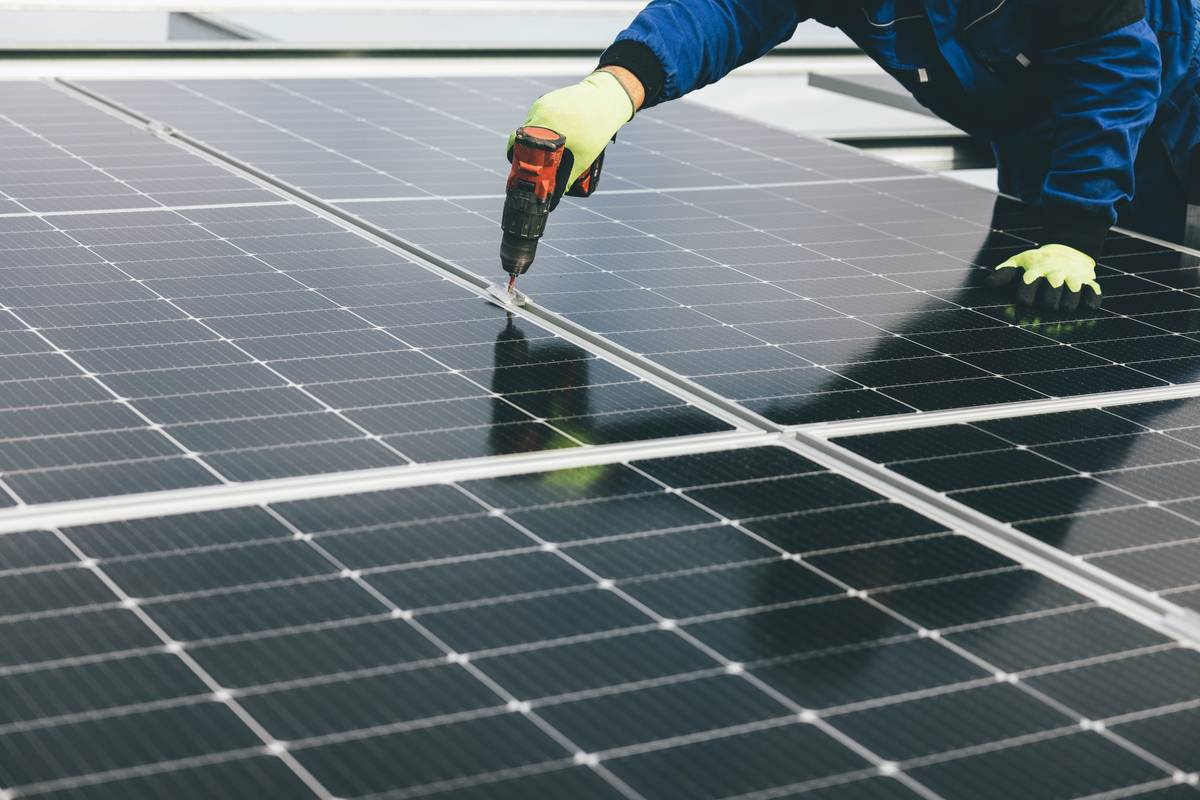
Use ballasted systems for membrane roofs; penetrating mounts for metal. Torque every bolt to manufacturer specs—document it.
4. Wiring & Grounding
Seal conduits at roof penetrations. Bond all metal parts per NEC 250.166. This is where most DIYers fail catastrophically.
5. Commissioning & Testing
Perform IV curve tracing and insulation resistance tests before grid connection. If it doesn’t pass, don’t flip the switch.
5 Best Practices That Prevent 90% of Field Errors
- Get certified, not just “trained.” Pursue NABCEP PV Installation Professional (PVIP) over weekend workshops.
- Shadow seasoned crews first. Theory ≠ practice. Observe how veterans handle thermal expansion gaps or shade mitigation.
- Use digital checklists. Apps like Solaredge Installer Portal reduce missed steps by 31% (Sandia Labs).
- Avoid this terrible tip: “Just follow the YouTube tutorial.” Roof anchors aren’t IKEA shelves—mistakes here can kill.
- Document everything. Photos, torque logs, test results—your warranty depends on it.
Real Results: How Training Translates to ROI
A California warehouse upgraded its 250kW system after retraining its maintenance team via Solar Energy Industries Association (SEIA)-accredited courses. Post-training, their system uptime jumped from 82% to 98.5%, generating an extra $22,000/year in avoided demand charges. Another case: a Texas installer reduced rework costs by 60% after mandating quarterly installation solar panels training refreshers.
These aren’t anomalies—they’re proof that competence pays. And clients notice. As noted on our About Us page, we partner only with programs that blend OSHA safety with hands-on technical drills.
Frequently Asked Questions
What’s the average duration of installation solar panels training?
Most accredited programs run 40–80 hours. NABCEP prep courses often take 6–10 weeks part-time, including field practicums.
Do I need an electrician’s license to install commercial solar?
In most states, yes—especially for systems over 25kW. Check your local regulations; many require licensed supervision even if you’re trained.
Can online courses replace hands-on training?
No. You can’t torque bolts or troubleshoot arc faults virtually. Hybrid models (online theory + in-person labs) are ideal.
How often should technicians refresh their installation solar panels training?
Annually. Code updates (NEC), new racking tech, and inverter protocols evolve fast. Stale knowledge = liability.
Does InternshipsAmerica offer solar training placements?
We connect students with vetted renewable energy employers. Explore opportunities through our Contact Us page—we’d love to help you start strong.
Is personal data shared during enrollment?
We never sell your info. See our full policy at Privacy Policy.
Bottom line: Great solar isn’t installed—it’s engineered. And that starts with relentless, updated installation solar panels training. Skip it, and you’re gambling with someone’s roof, safety, and bottom line. Do it right, and you power progress—one kilowatt at a time. Ready to build your skills? Reach out today.